
QC photos: the Wishbook’s reading method for a warehouse set
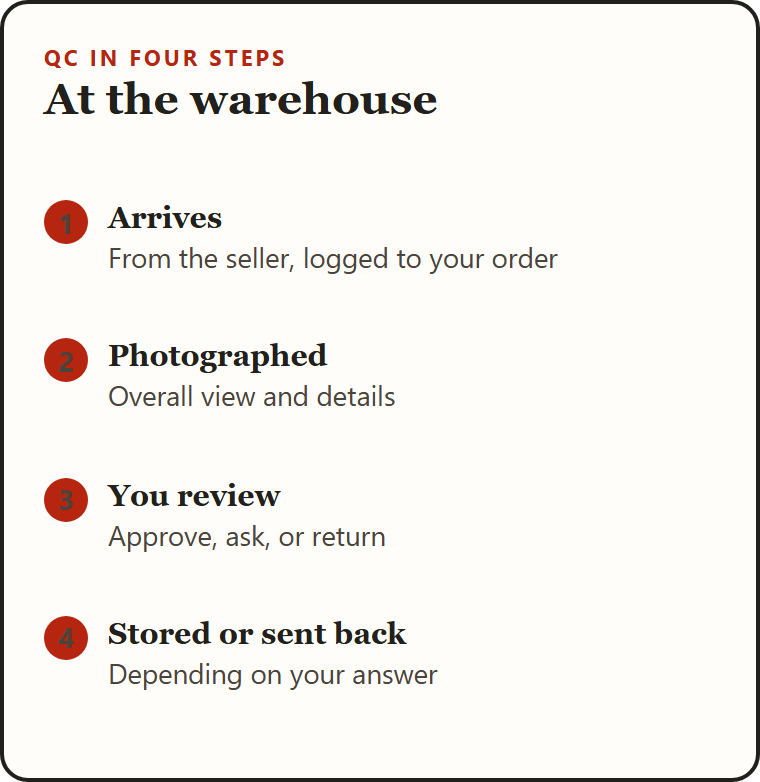
The photo set from the warehouse is your first look at the real item. Here is how we read one, what we compare it with, and how we decide between keeping, exchanging and returning.
QC photos, defined for this site
QC is short for quality check. At an agent it names the photos the warehouse takes as your item comes in from the seller, ahead of storage. The CNFans home page of 23 August 2026 named quality check and storage as the middle of its three stages, between ordering and international shipping.
The photos have one job: to let you see the real piece while it is still in China and still close to the seller. A catalog photo shows what the seller wants you to see. A warehouse photo shows what the seller actually posted.
What a standard set includes, and what extra photos cost, varies by agent; the CNFans terms were not in any page we could read. Expect at least an overall view of the item. Anything more specific is worth asking for in your order note.
A far-to-near pass over one photo set
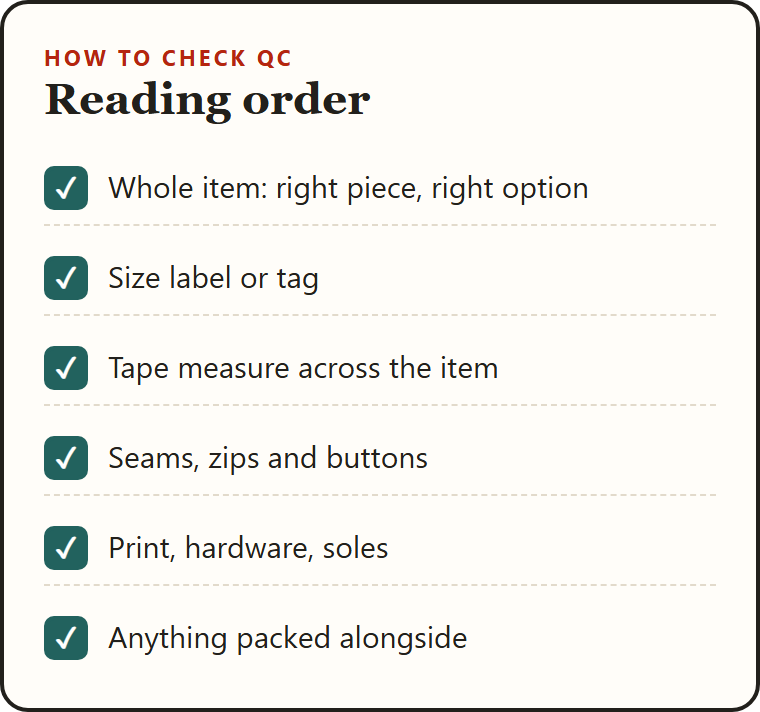
A fixed reading order stops you fixating on the first thing you notice. We go from far to near: the whole item, then any label, then measurements, then close-ups, then the parts that usually fail.
Start with the overall photo and ask one question: is this the item I ordered, in the option I ordered? Next the size label or tag. Next any photo where a tape has been laid over the piece, if the agent took one. Finally zoom into seams, zips, prints and soles.
Keep the listing open in another tab while you read. Comparing side by side is far more reliable than comparing with your memory of a photo you saw three weeks earlier.
Colour: checking the option you paid for
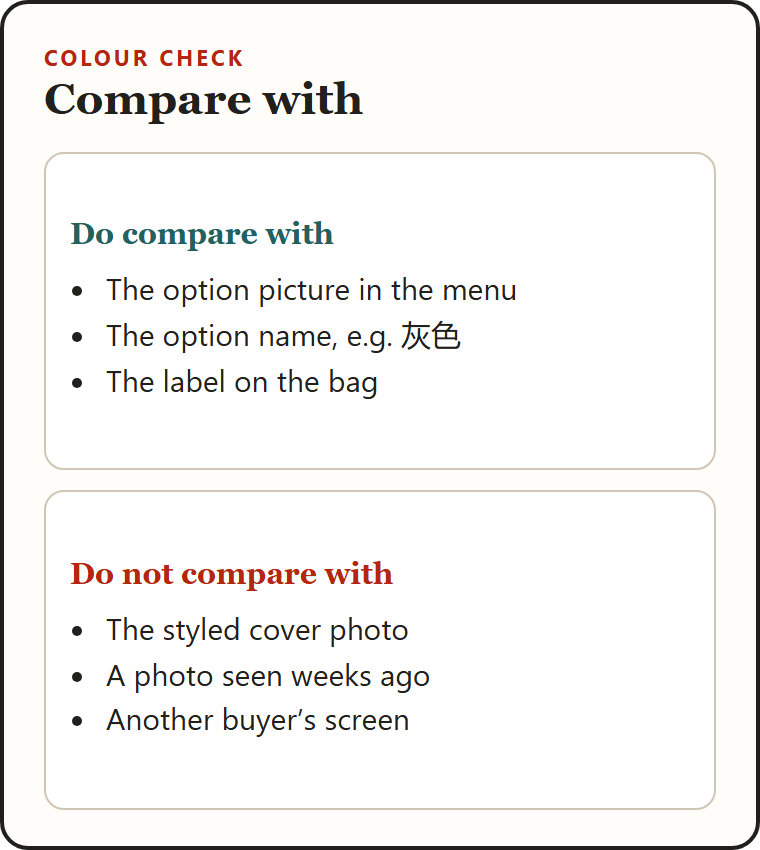
Colour is the commonest surprise, and the hardest to judge, because warehouse lighting, the camera and your screen all shift it. Do not compare the warehouse photo with the seller’s styled cover. Compare it with the small picture attached to your option in the seller’s menu.
On the track pants listing we checked, each colour option, 黑色 (black) and 灰色 (grey), carried its own picture. That is the reference to hold up against the warehouse photo. If the two disagree on which colour it is, not just on shade, ask.
Shade differences between a studio photo and a warehouse photo are normal. A different colour is not. Write the option name in your note in the seller’s own characters, and the warehouse can check it against the label on the bag.
Measurements against the seller’s chart
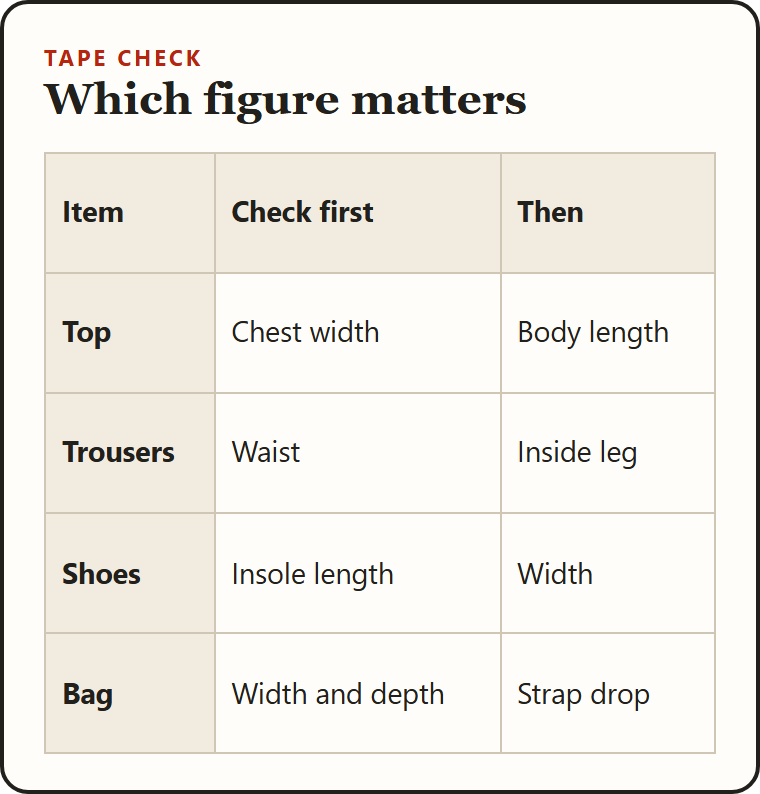
If the agent lays a tape measure across the item, you can check the key figure against the seller’s chart. For a top that is usually chest width and body length; for trousers, waist and inside leg; for shoes, the insole.
Remember how the chart was measured. Many Chinese size charts give flat measurements, taken across a garment lying on a table, not around a body. A chest figure that looks small may be a flat width that you double for the circumference.
Small differences are normal, because tape placement varies. A large difference on the measurement that decides fit is worth a question. Ask for the same measurement again, laid flat, before deciding anything.
Requesting one more photo, precisely
If a set leaves a question open, ask for one specific extra photo rather than “more photos”. A request that names one angle or one measurement gets a useful answer faster.
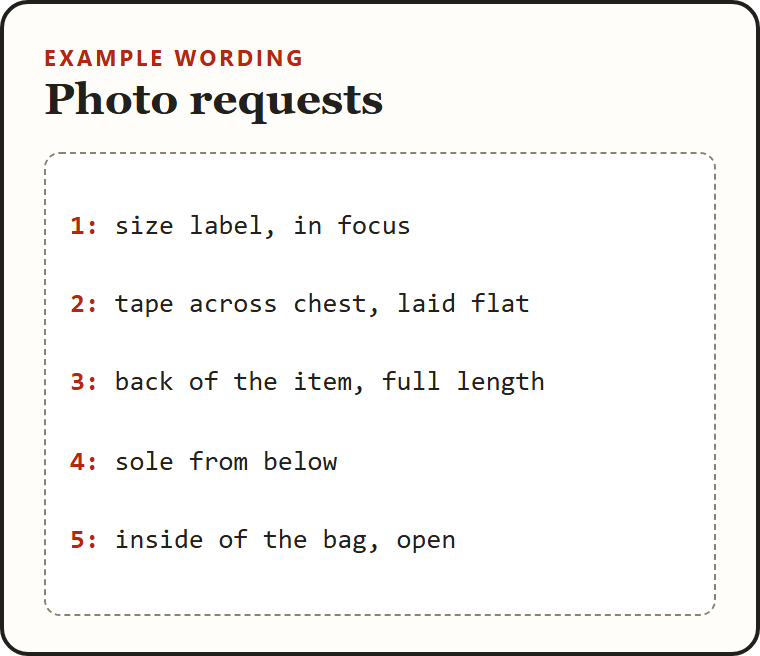
Good requests are short and checkable: the size label in focus; the tape across the chest, laid flat; the back of the item; the sole from below; the inside of a bag. Agents may charge for extra photos; check the price first.
Keep your requests in the order thread and save the replies. If you later need a return or a refund, a clear record of what you asked and what the photos showed is your strongest evidence.
Keep, exchange or return
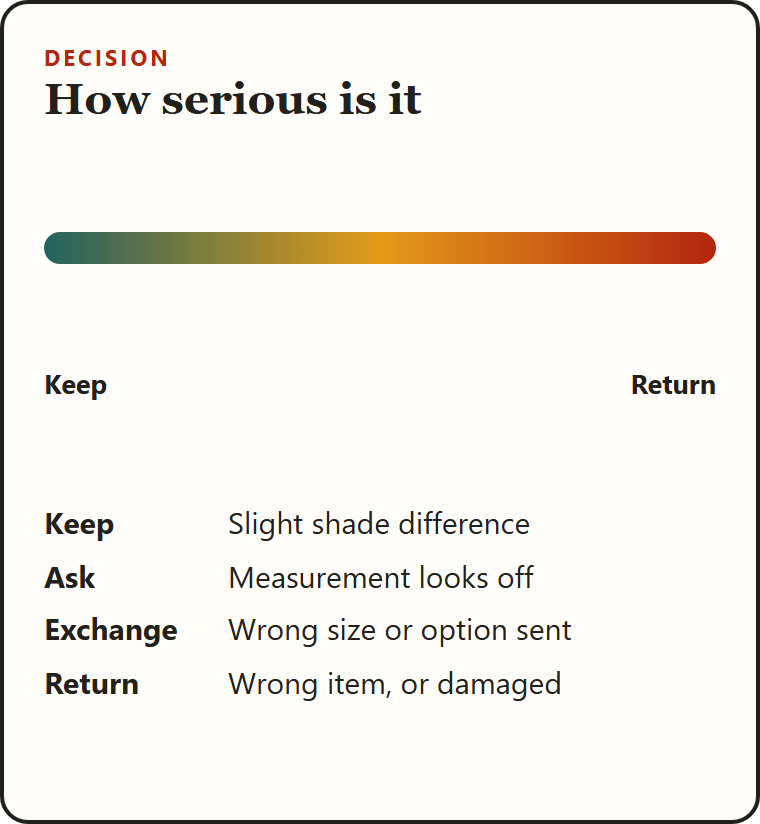
Three doors open after the reading. Keep the item and leave it waiting for your parcel; ask the seller, through the agent, for an exchange to the right option; or send it back for a refund. The longer you wait, the harder the last two become, because sellers set their own windows.
Agents run returns through their own process and charge for the domestic postage back to the seller. We could not read CNFans’ own rules on this, so ask in your account before you decide, and get the answer in writing.
A useful rule of thumb: return for wrong item, wrong option or damage; think twice about returning for a small shade difference, because the return postage and the wait often cost more than the disappointment.
QC on the catalog side
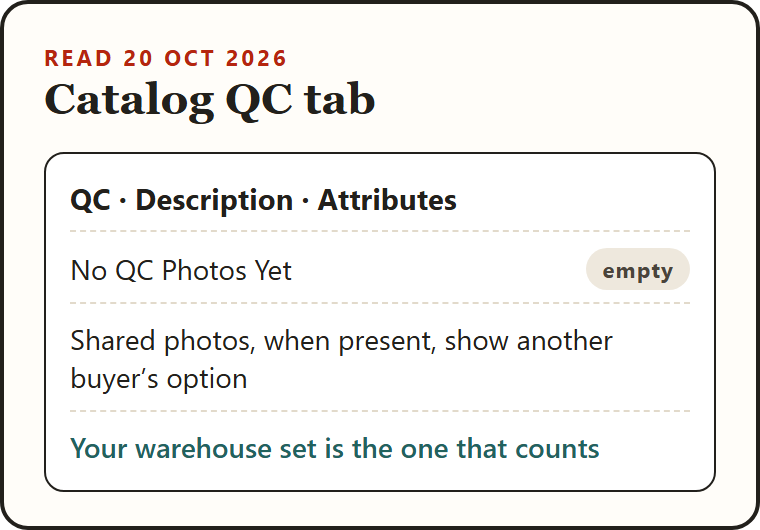
Catalog product pages have a QC tab of their own, meant for warehouse photos other buyers have shared. On the track pants page we opened on 20 October 2026 it read “No QC Photos Yet”. For many listings, then, your own warehouse set will be the first real photo anyone has seen.
When shared photos do exist, they help with the want list: they show how the item looked when it reached a warehouse for someone else. But they show that buyer’s option and that day’s stock, so treat them as a preview, not as a promise about yours.
Read the cap picture without inventing the missing facts
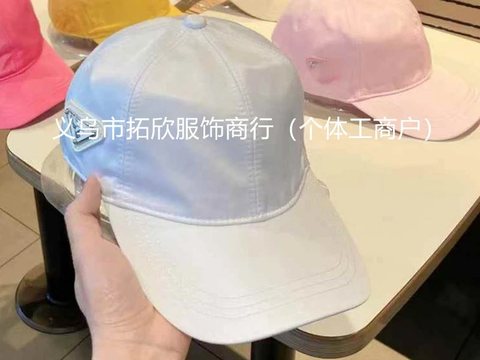
The front view shows the bill, crown seams and colour choices under that lighting. It hides the rear fastening, interior band, label and head circumference. The text over the photograph identifies a seller; it is not a warehouse order number or evidence of an inspection.
Save the selected colour option, then ask for a back and inside view of the actual received cap if the closure or size is unresolved. A photo of the bill cannot confirm the adjustment range. The colour may also shift under different light, so compare the option text as well as the visual appearance.
Keep “fit checked” unticked in the want list until you have the relevant size information. A neat photograph can answer a style question while still leaving the buying decision incomplete.