Shipping a CNFans parcel: lines, weight and one box for many finds
After the photos are approved, the parcel is the last big decision. This page covers the lines, how weight and size are charged, how to group finds, and what happens at your border.
Postal, courier and special lines
A shipping line is the arrangement that moves a parcel from the agent’s warehouse to your door: a route, a carrier and a price rule together. Agents offer several, and the choice is the biggest decision you make after approving photos.
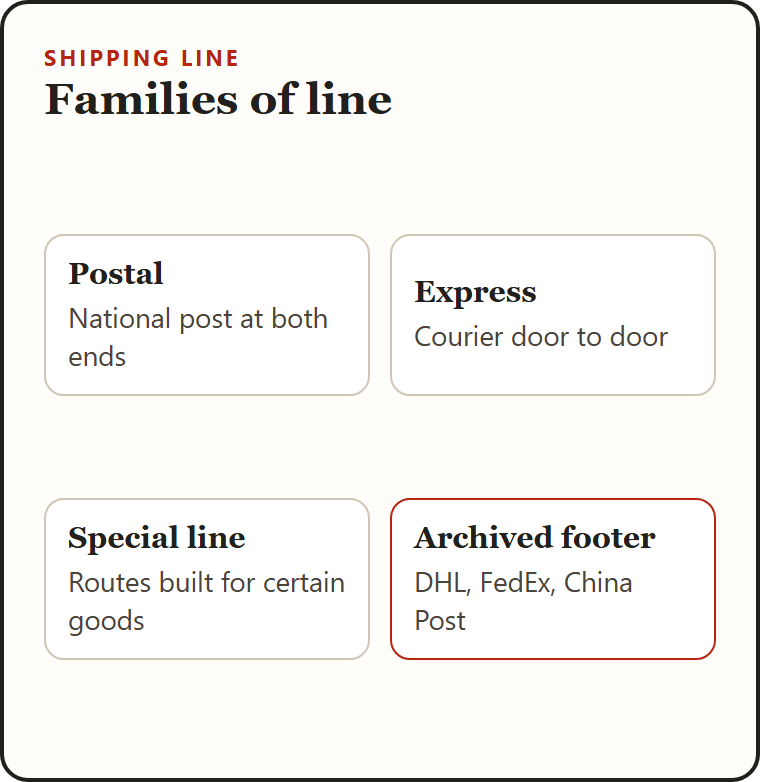
Three families cover most of the menu. Postal lines hand over to the national post at each end, usually cheaper and slower. Express couriers keep the parcel on their own network door to door, faster and fussier about contents. Special lines are arrangements an agent builds for particular goods or countries, clothing above all.
The archived CNFans footer showed DHL, FedEx and China Post logos, and its navigation linked to an estimation page. Which lines run to your country today is a question only the list in your account can answer, read on shipping day.
Weight, size and volumetric weight
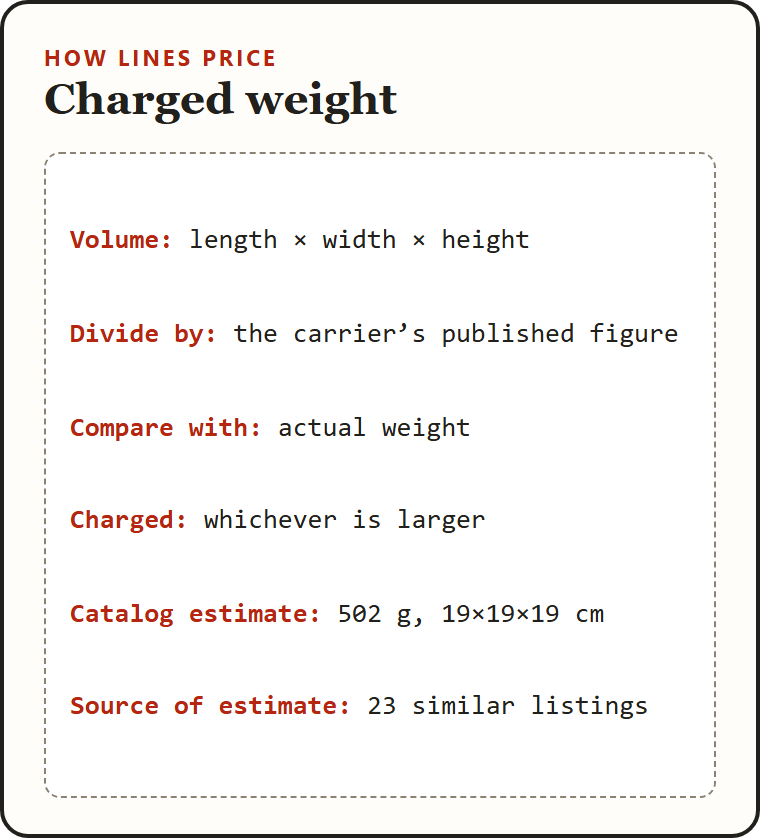
A parcel is billed on the greater of two weights: the one the scale shows, and a volumetric one worked out from its dimensions, length by width by height over a divisor each carrier publishes. Bulky but light goods lose out this way; a single puffer in an oversized carton can be billed like a far heavier parcel.
That is why packing matters. Removing a shoe box, folding a jacket tightly or choosing a smaller carton can move a parcel down a price step. Ask the agent what packing choices exist before you ship.
For planning, the catalog’s product pages give a rough weight. The track pants page we read on 20 October 2026 said 502 g and a 19 by 19 by 19 cm box, taken from the median of 23 similar listings because the item itself had never been measured. Use such figures to compare finds, not to predict a bill.
Grouping a want list into one parcel
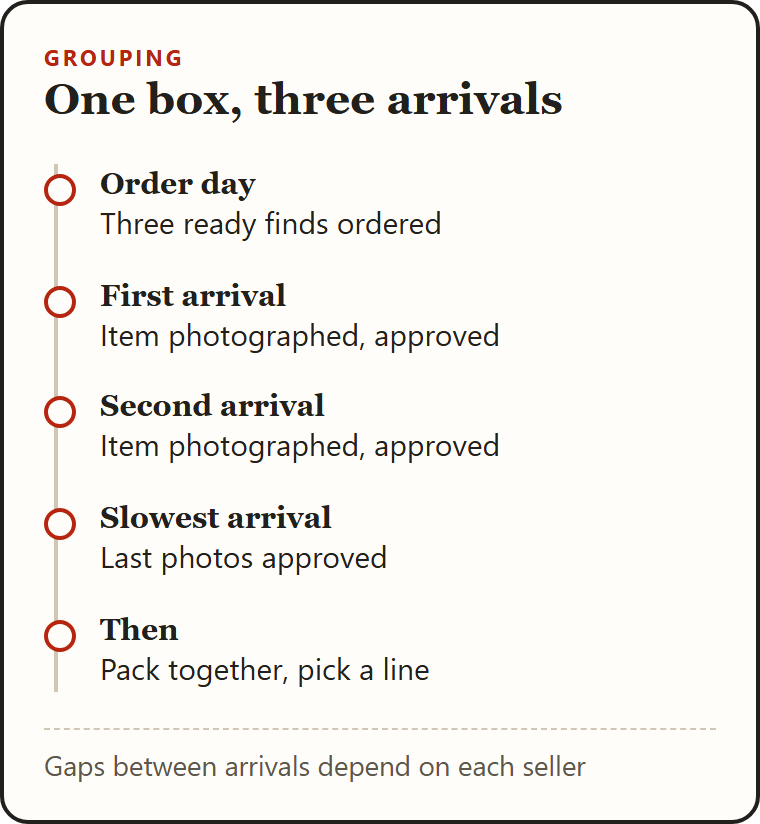
Most lines charge more for the first part of a parcel than for each extra part, so several finds in one box usually cost less per item than the same finds sent one by one. A want list helps here, because it shows which finds are close to ready and might arrive at the warehouse in the same week.
Timing is the catch. Items from different sellers arrive days apart, and some sellers are slow. Order the finds you want together within a short window, and ship when the slowest one has arrived and passed its photos.
Do not let items sit indefinitely waiting for one late piece. Storage at agents is free only for a limited time, and we could not read CNFans’ terms. If one item is holding up the rest, ship without it and add it to the next parcel.
Packing decisions, each with a price tag
The archived CNFans help menu had a topic called “Packaging” under delivery, which is where an agent normally explains its options. Common choices at agents include removing retail boxes, vacuum or tight packing for soft goods, extra padding for fragile items and splitting a parcel that is too heavy for a line.
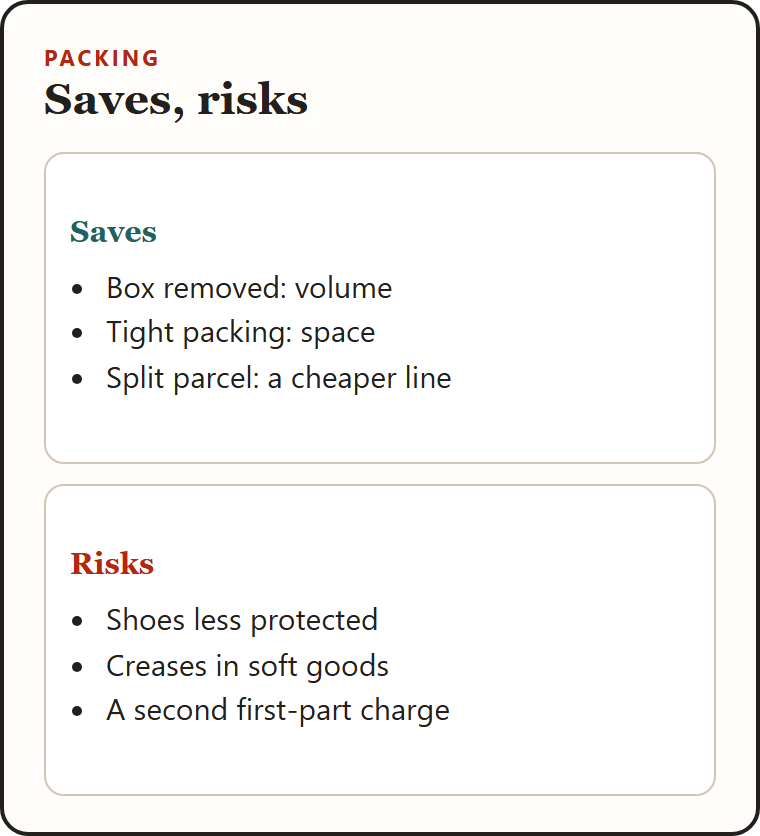
Each choice trades something. Removing a shoe box saves volume but leaves the shoes less protected. Tight packing saves space but creases a jacket. Splitting costs a second first-part charge but may let you use a cheaper line for each half.
Before the box leaves, request one photo of it packed. That picture records what went in and how it was protected, and it gives you a record if anything goes missing.
Goods that strike lines off the menu
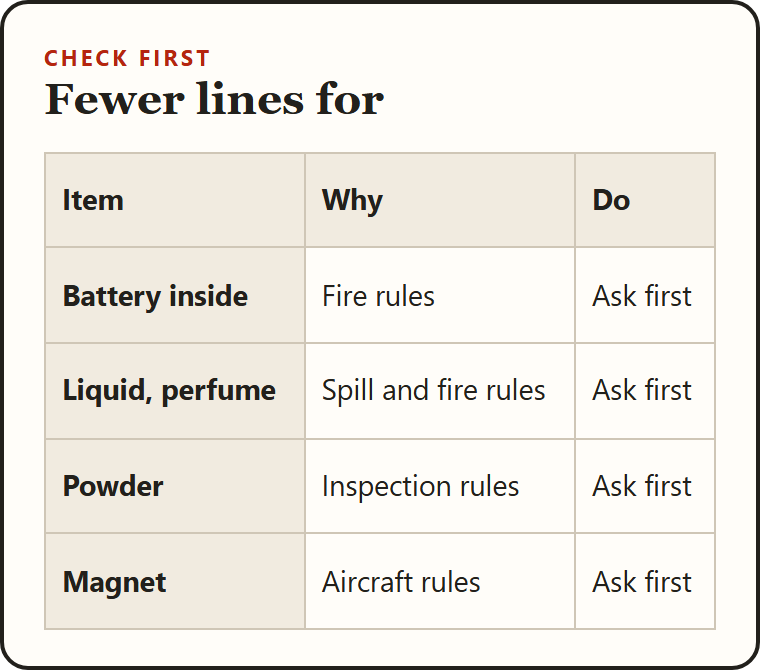
Not every item may board every line. Loose batteries, liquids, powders, magnets and anything that reads as a weapon are the usual problems. A battery-powered watch, a bottle of fragrance or wireless headphones can each rule out the cheapest lines and leave you with fewer, dearer options.
This matters before you order, not after. If your want list includes such an item, find out which lines accept it before you buy, or plan to ship it separately. The catalog’s perfume category held 35 items on 20 October 2026, and every one of them is a liquid.
We could not read CNFans’ list of goods it will not ship. Ask in your account, and follow the carrier’s rules as well as the agent’s.
Customs and duties at your end
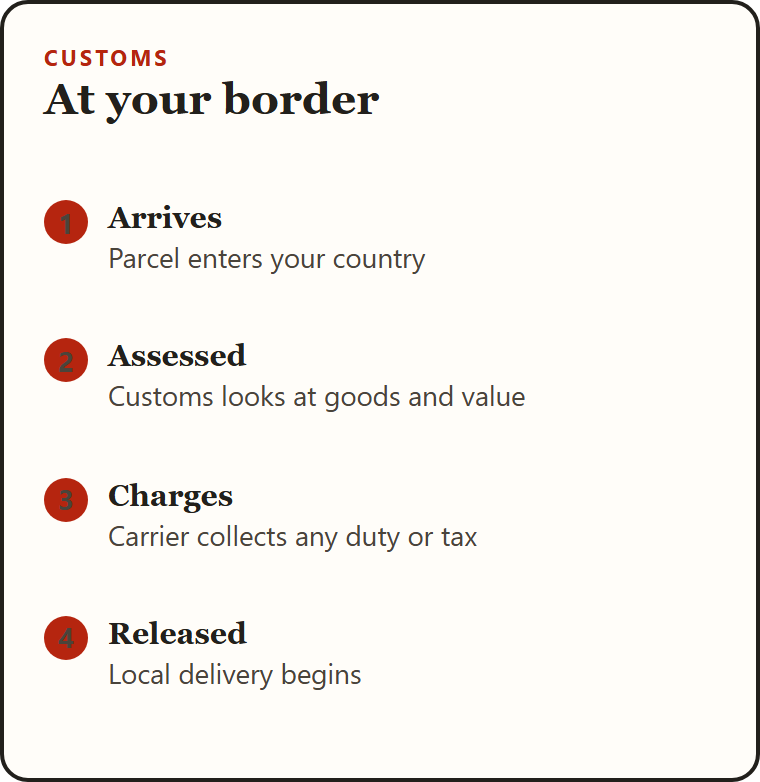
Entering your country, the parcel passes customs. Depending on the goods, their value and the rules where you live, there may be duty to pay, a sales tax or VAT, and often a handling charge from the carrier. As the buyer you are the importer, so those charges are yours.
No thresholds appear here, and nothing on this site tells you what to write on customs paperwork: rules differ by country, they change, and getting them wrong is your risk, not ours. Your national customs authority publishes the rules on its own website, and that is where to check.
Keep your order receipts and warehouse photos. If customs or a carrier asks what is in the parcel and what you paid, you will have the answer to hand.
Following a parcel in transit
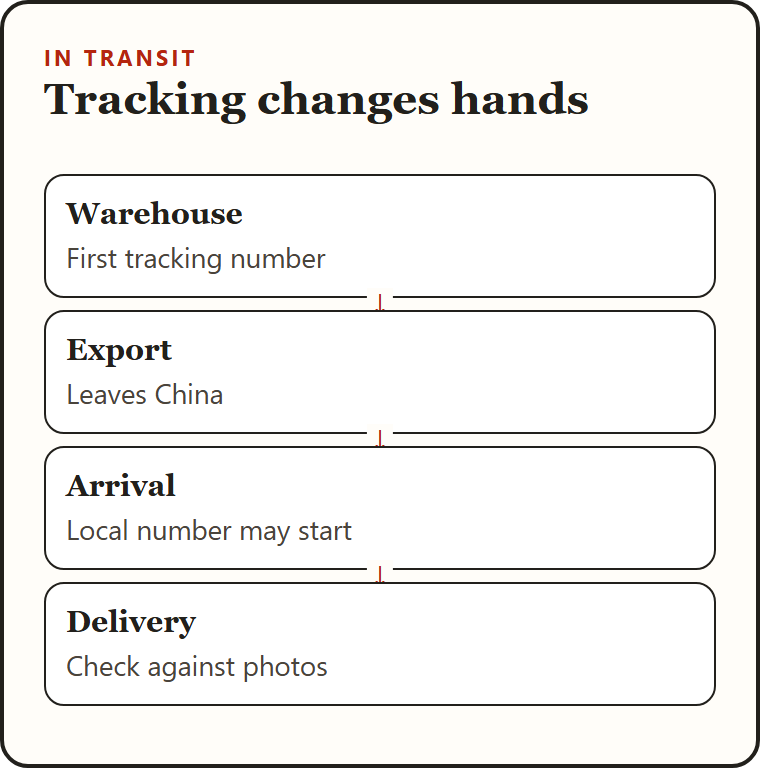
A tracking number follows the shipping payment. On many lines it changes hands: a Chinese number for the first leg, then a number from the carrier in your country once the parcel lands. Some tracking pages only start showing scans days after the parcel leaves the warehouse.
Pauses of several days are normal, especially before export and at customs. A parcel that has shown no scan for much longer than the line’s usual time is worth raising with the agent, who can query the carrier on your behalf.
When it arrives, check the contents against the warehouse photos before you throw the packaging away. The help page explains who to contact if something is missing or damaged.